
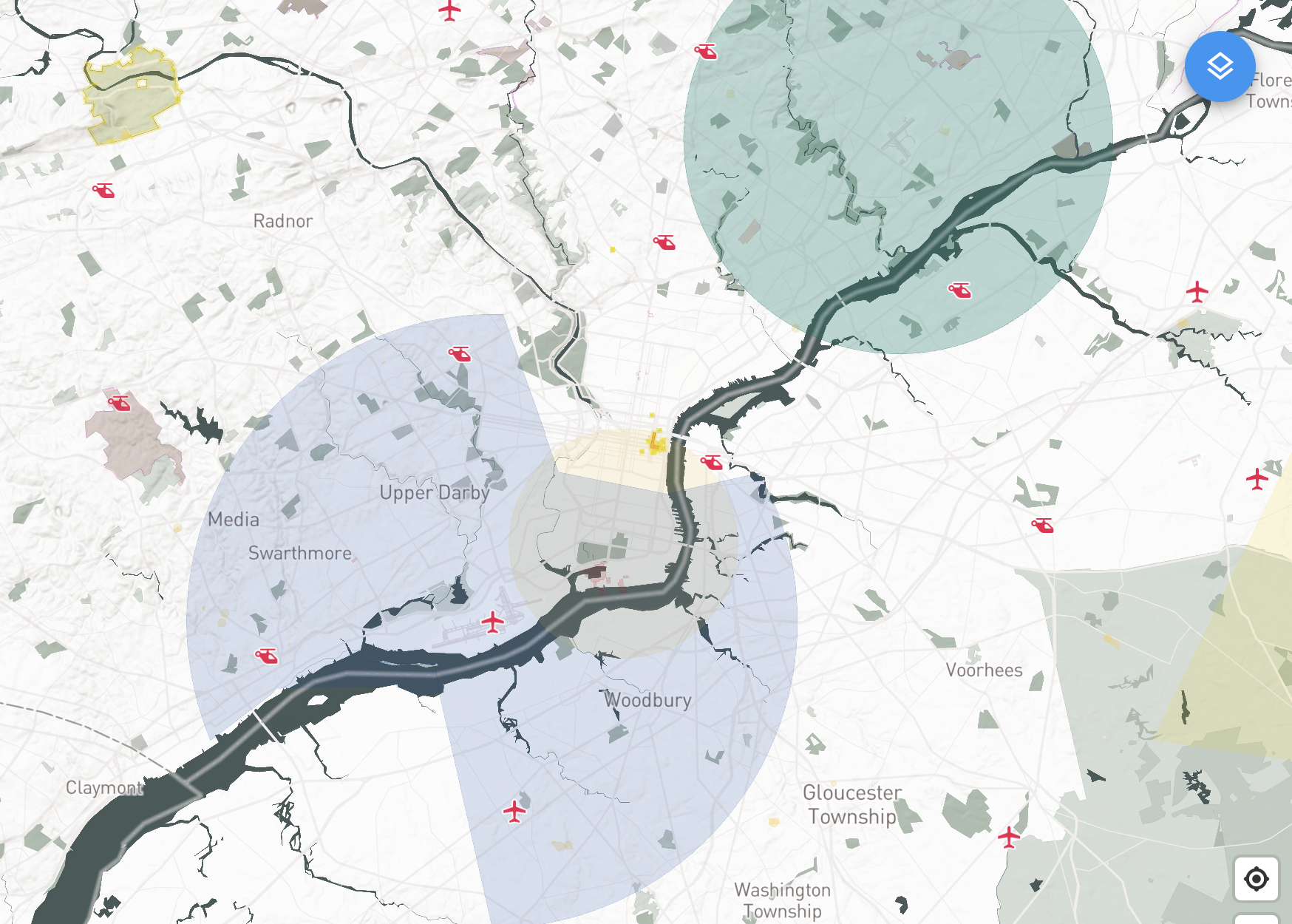
Check Surrounding Airspace Before You Fly
All areas above ground are part of the National Airsopace System. The FAA determines where you can legally fly a drone. Before every flight, you should check for restrictions, controlled areas, and temporary flight restrictions (TFRs).

- Class G (Uncontrolled): Generally open for drone flights up to 400 ft without prior authorization.
- Controlled Airspace (Class B, C, D, E): Requires FAA authorization (typically via LAANC) before flying.
- Restricted / Prohibited Areas: Flying is not allowed due to security or safety concerns.
- Special Use Airspace (often shown in yellow): May include military operations or other hazards—extra caution required.
- Temporary Flight Restrictions (TFRs): Short-term restrictions (events, emergencies, VIP movement) that can appear anytime.
- Waivers and Special Permission: Approvals can be pursued through LAANC. Waivers can be pursued through the FAA Drone Zone website (except Washington D.C.)
Even if an area looks clear, you are still responsible for verifying airspace, checking for TFRs, and obtaining authorization when required. Flying into restricted airpsace can have severe consequences, including fines and prison time. This is especially true near national landmarks, goverment facilities, and the like. ALWAYS check the airspace before you fly. *BE AWARE* that airspace approval is not the same as approval to launch and land your drone. Check with your local authorities regarding ground restrictions.